69
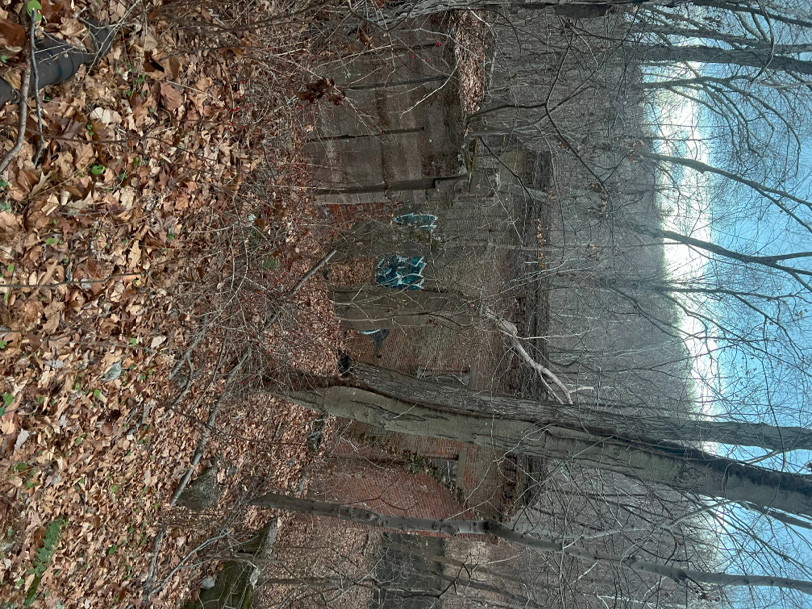
Turn around and come back down the gentle slope you just climbed. Continue heading against the current of the river, away from the small loop in the road. A multistorey brick facade will come into view on your right side, its remnants ascending towards the streambed. I’d guess it’s over a century old at this point, having weathered countless explosions, intentional or otherwise, only a few bricks thick. It reads like a house of cards or a theater set piece, ready to disintegrate into its components or fall flat on its face as a unit.
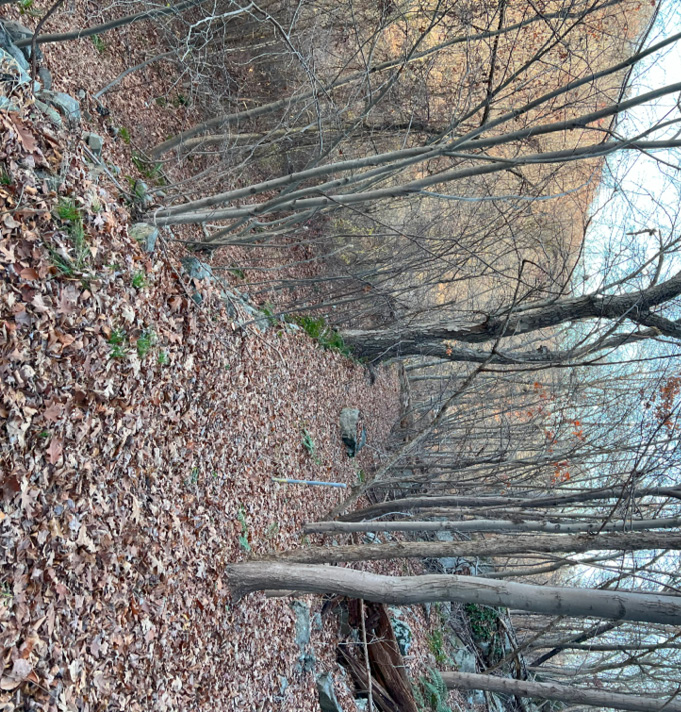
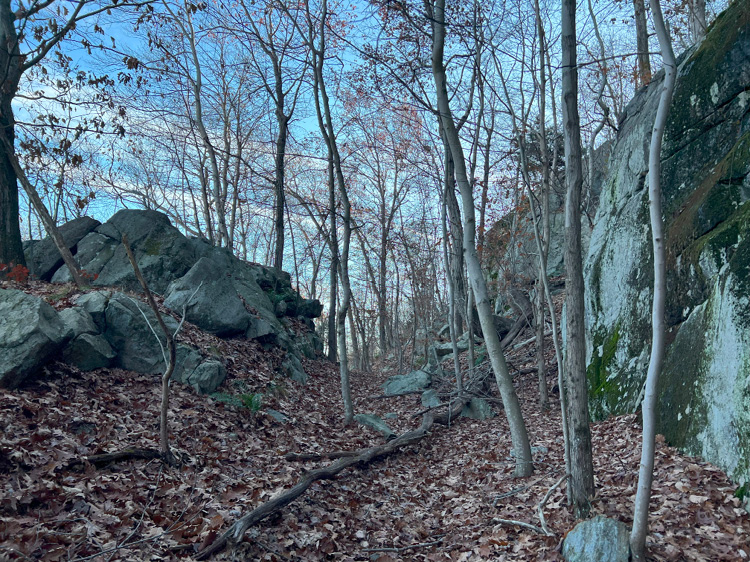
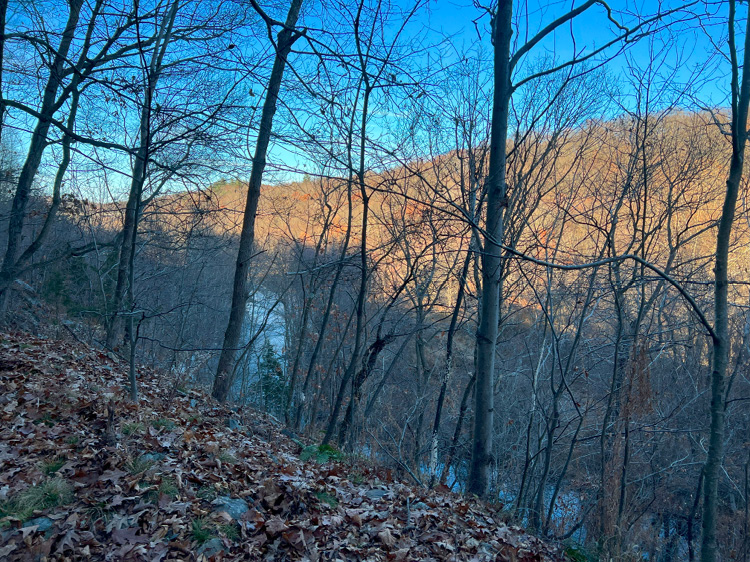
The road starts to incline, having a defined contour of its own and seeming to pull the land with it. The rock formations again beg the question; Are they formations or excavations? You’ll reach a significant height above the Wanaque River here, and at some point cross two borders: the municipal one between Pompton Lakes and Haskell (part of Wanaque Borough), and the organizational one between the Fuze Works and the Powder Works. Neither is discernable by features on the ground, as the road continues over its saddle and starts to descend.
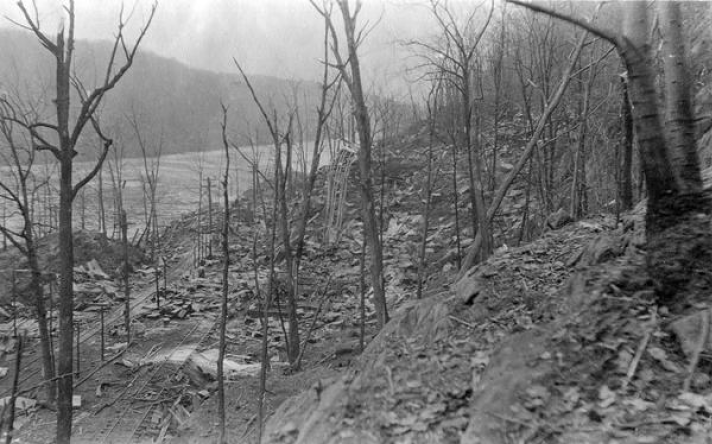
Opposite, top left: “Aftermath of DuPont Company’s Haskell
Works explosion,” 1917, Hagley Museum and Library.
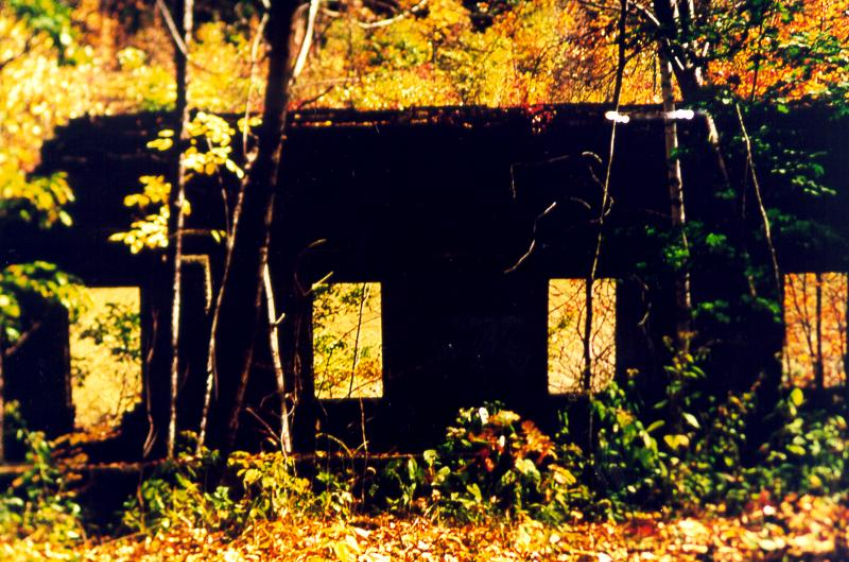
Above: Photo of brick ruins by Terri Kennedy, who wrote of their surroundings, “The ground slopes steeply down toward the lake here, so that the ground where I was standing is actually several floors high when you look at the building from the river side...
Off to the right were ruins of rails and what looked like a winch...”