90
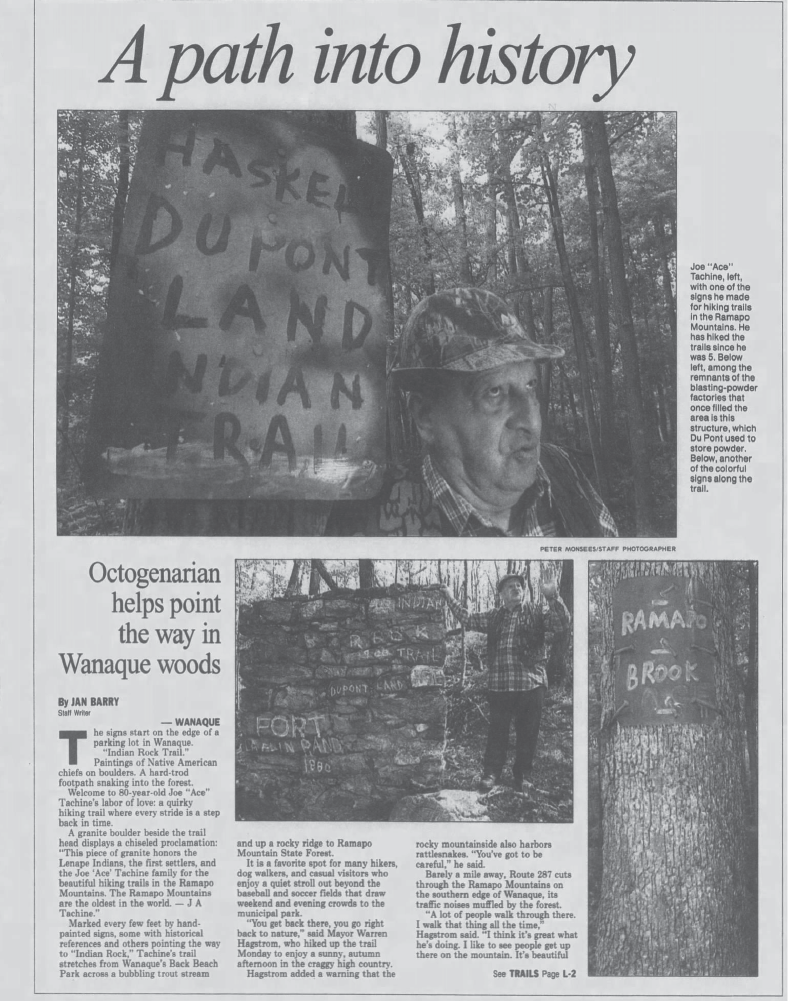
“A Path into History.” The Record, October 3, 2000.
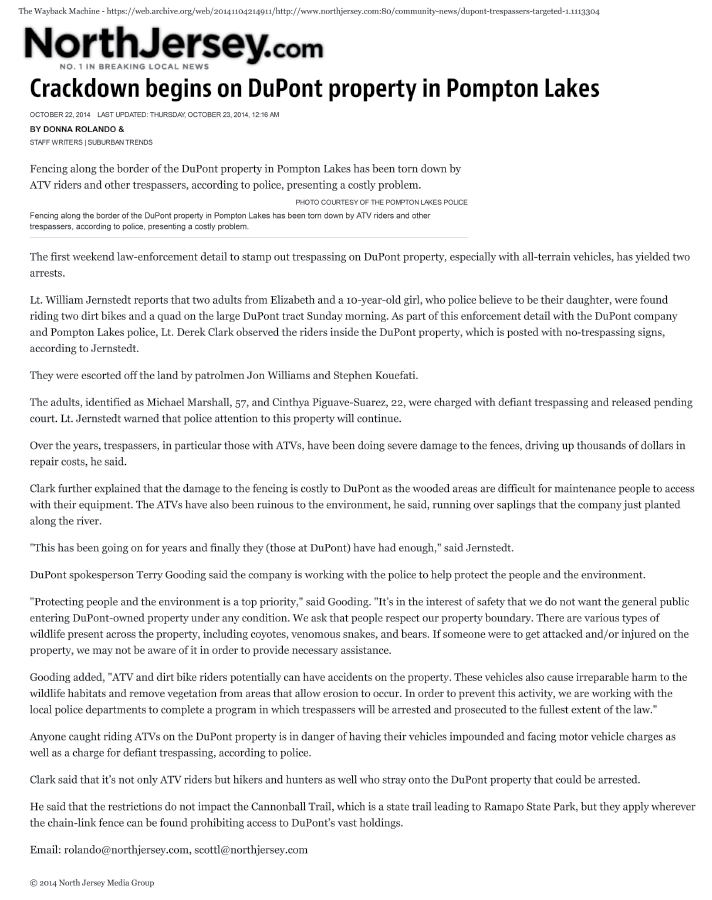
“Crackdown Begins on DuPont Property in Pompton Lakes.” NorthJersey.com, October 22, 2014.
89
Despite the companies’ seeming desperation to dispense of the lands, and the somewhat easy access to the property for those who know where to look for gaps in the fences, the public at large is not welcome on DuPont’s property. In 2014, months after the closure of DuPont Field, articles came out in local newspapers threatening a “crackdown,” enlisting the Pompton Lakes Police in addition to a private security force to deny access to trespassers. The company claimed environmental damage to saplings they had planted, largely blaming ATV riders, but threatening arrest to those who even “stray onto the DuPont property.” They implicitly acknowledged that the boundaries of the tract can be unclear in airing their grievances about the defacement of the fence, which hasn’t been an effective deterrent since the construction of Interstate 287 through the property left nearly the whole northern border with Wanaque’s Back Beach Park unfenced and unmarked.
Reports of unofficial use of the premises at the Pompton Lakes Works go back to at least 1912. That year, Thomas Travis published an article entitled “Hunting Partridge Among Powder Magazines,” recounting “From the crags we could see the works lying in the hollows; Romance and thrills enough they were among the commonplace.” Many people in the area have a long-standing relationship with the property. Former DuPont employee Joe “Ace” Tachine took it upon himself to start guiding others with handmade signage that still stands today, telling bits of the history of the immense plant. One local resident wrote of the property on Facebook, “The mountains were our playgrounds. We followed paths to our favorite spots where we had campfires and slept in the woods. The two mountains were attached by the silver bridge which was great for swimming. The cool thing is you could cross over the bridge and into Haskell to see the foundations of the buildings that were there. The small hikes would lead to the mountain tops and if you had the
courage you could yell to hear you[rself] echo.”
DuPont and Chemours have claimed to maintain an office on Wanaque Ave for community engagement and education, since cleanups began. They are particularly unreceptive to calls, but publicly maintain that all contamination has been dealt with via sporadically-timed statements on their otherwise dated website. It seems the companies would like for residents to believe their claims of remediation, but are willing to jail them for even attempting to see what goes on in the landscape beyond their backyards. That’s a lot of good will to expect from a community of people who allege that your corporation caused their cancer.
The intention behind this thesis is to legitimize the trespass as means of rejecting an injustice. Confrontation with an elusive corporate entity can be unattainable, and finding a way to understand the magnitude of the damage, environmental or otherwise, inflicted at a brownfield site is usually a matter of compiling statistics. Though DuPont has left numerous irreparable wounds in the landscape, the effects of which continue to be felt throughout the community, the most impacted sites are more valuable as places of witness and encounter with this damage than as roadblocks to public land access. The company claims success in its remediation and says there’s nothing to fear. If so, residents should feel entitled to take themselves on a tour.
90
“A Path into History.” The Record, October 3, 2000.
“Crackdown Begins on DuPont Property in Pompton Lakes.” NorthJersey.com, October 22, 2014.