87
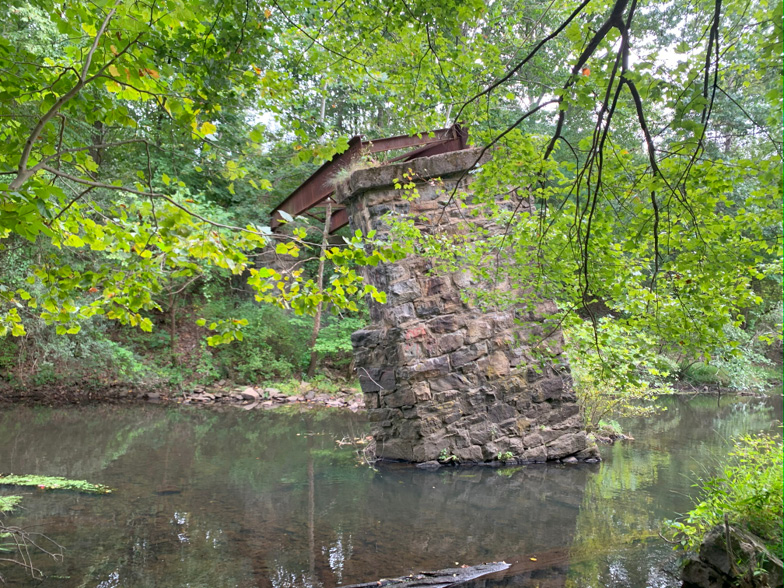
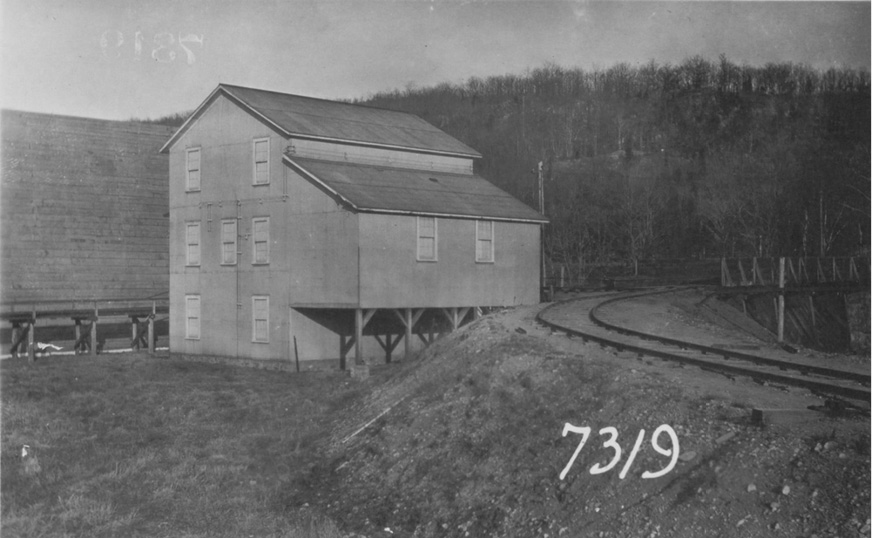
Left and inset: “Wet paste mixing house, Haskell Works,” 1914, Hagley Digital Archives.



87
Left and inset: “Wet paste mixing house, Haskell Works,” 1914, Hagley Digital Archives.
88
The influence of explosives as the product of the Pompton Lakes Works is evident in the earth-moving capacity clearly displayed by the massive surface disruptions. These activities continually fractured the bedrock, allowing pollutive effluents to seep into the groundwater. Soon, uncommon illnesses started to manifest among plant workers and those living nearby. It wasn’t until 1988 that the pollution was widely reported, though its presence had been recorded decades before in reports that were kept locked away in a keyless safe. Then-mayor John Sinsimer had the safe drilled open, revealing almost a century of reckless explosive testing and production, and began a campaign to hold DuPont and the New Jersey Department of Environmental Protection accountable for cleanup of the property. The site finally ceased production in 1994, leaving behind crumbling buildings, a massive, forested property underlain by heavy metal sediments, and countless cancer patients.
The legal battles for compensation have raged ever since, as residents in the area of the polluted groundwater received the option of a one-time $1,800 payout or the installation of vapor mitigation unit to neutralize the toxins beneath their homes. In that time frame, the Environmental Protection Agency has overseen the remediation of over 200 AOCs on-site. Ownership of the property has shifted to Chemours, a spin-off of DuPont. The company is cheekily named with a portmanteau formed from part of the official name of DuPont de Nemours, Incorporated, and their specialty product, chemicals. The name change has had little staying power, and the site is still widely referred to under the name DuPont.
Claims of great progress have been made. Proposals have been made for municipal ownership of the property, hiking trails across its boundaries, a wind and solar farm, and a hotel and conference center. DuPont and Chemours have demonstrated eagerness to rid themselves of the tract, but as Pompton Lakes’ largest landowner, and therefore taxpayer, plans always seem to fall through.
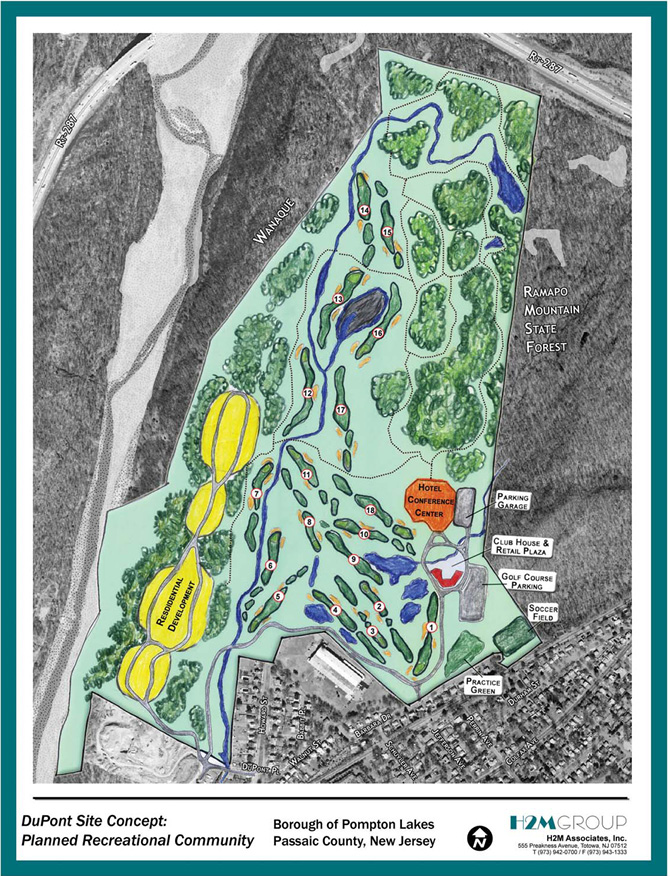
H2M Group’s concept for the site from
Pompton Lakes’ 2007 Master Plan
Conclusion