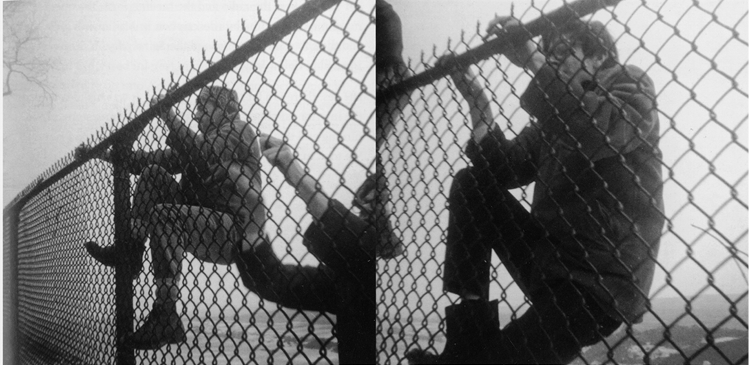
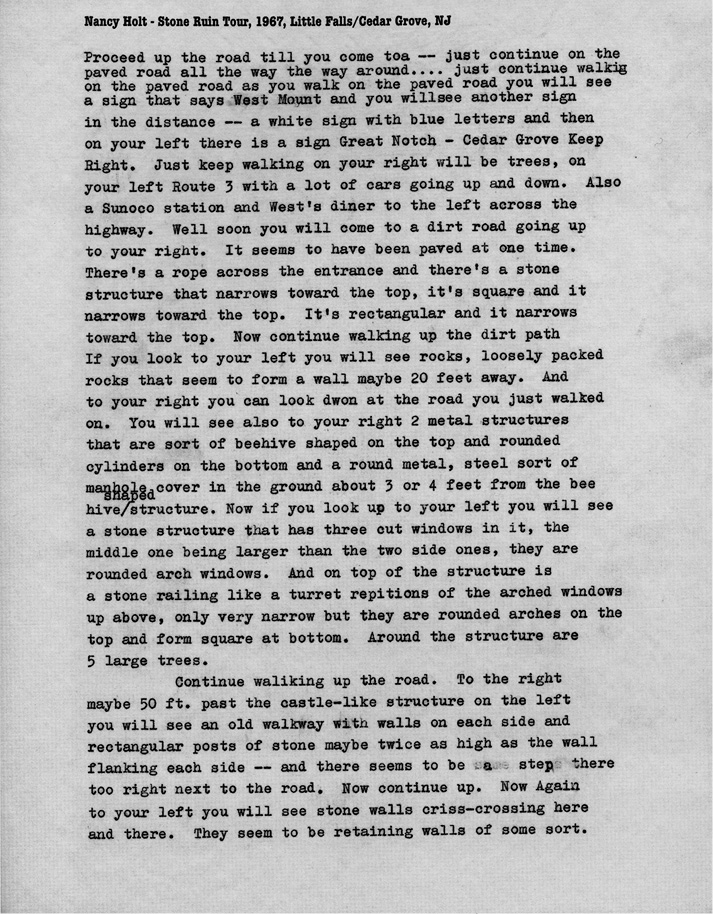
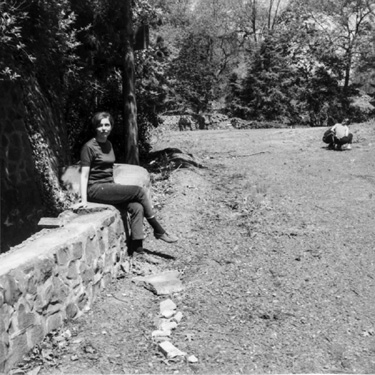
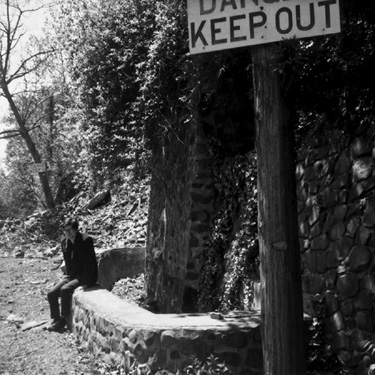
Once I began to study art, I realized that my perceptions about home had many direct artistic precedents. Of greatest interest to me were the works of Nancy Holt and Robert Smithson, a couple known for their contributions to the monumental sculpture/landscape design genre of art that is referred to as land art. Holt and Smithson were raised in Clifton and Passaic, respectively, two other towns in Passaic County, where Pompton Lakes is located. Both prolific photographers as well, they each conducted and constructed early works in situ at quarries, construction sites, ruins, wildernesses, and other suburban oddities with a marked interest in infrastructural, geological, and sometimes archaeological, aspects of the built environments of North Jersey and elsewhere. Smithson was also an influential writer, with his 1967 essay “The Monuments of Passaic” appearing in Artforum, featuring photos re-examining a sandbox, a bridge, and a set of parallel pipes spewing into the Passaic River as notable monuments and recognizable features of an otherwise amorphous suburb.
Through works like Smithson’s “Monuments” and Holt’s Stone Ruin Tours I and II, the reader is led on both a set physical route and into a way of perceiving the built environment, guided by the text and images. These may serve to aggrandize places and structures that others see as forgettable, undesirable, blighted, or forbidden; features so familiar to my experience in New Jersey that I struggled to identify them in the landscapes of home, let alone explain their significance, without the validation of precedent.
The pair embraced the most derided aspects of the state, examining sites of dereliction, extractive industry, and environmental devastation, and recontextualizing their roles as destinations in themselves. Holt and Smithson recognized these places as integral parts of the local landscape, rather than unsightly blemishes to be remedied. They demonstrated a willingness to assert
their perceived right to access these lands, with some of their works bordering on trespassing tutorials. Their works inspired me to view Pipeline and Overpass as more than illicit retreats for drunk kids; They were imaginative reuses for properties that defined the spatial reality of the town, but to which access was denied by statute and security forces. They were places where residents could reclaim the parts of their town that had become rubble, railyards, and refuse dumps. Places of confrontation, witness, and encounter with otherwise intangible histories, legendarily locked away behind the “No Trespassing” signs.